IBCC Attestation and Equivalence: Step-by-Step Guide
A practical guide to IBCC attestation and equivalence in Pakistan. What it is, who needs it, the steps, documents required, and rough fees and timelines for O/A Level and overseas students.
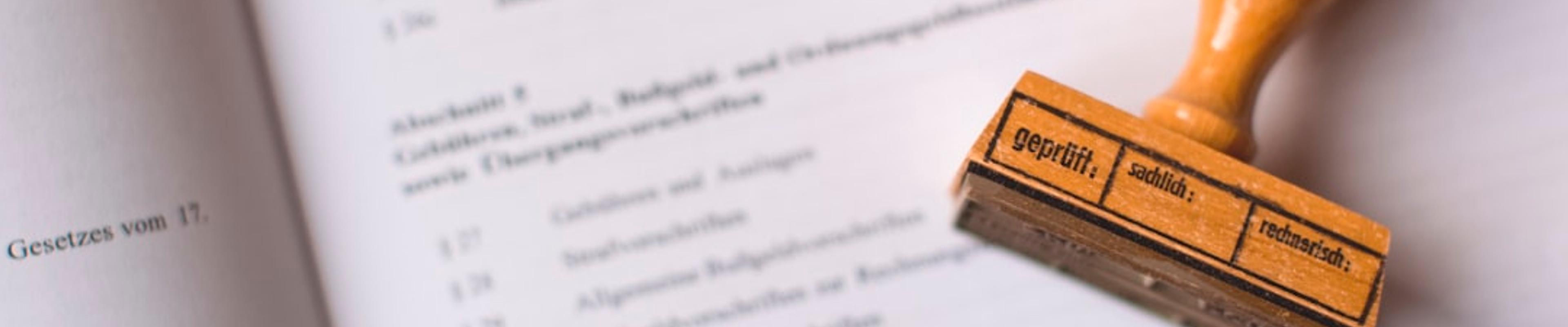
IBCC attestation verifies your Pakistani board certificates, and IBCC equivalence converts foreign qualifications like A/O Levels into Pakistani SSC/HSSC marks. Both are done online or by courier through the IBCC portals. Without equivalence, A/O Level students cannot sit MDCAT or ECAT. Always confirm current fees on the official IBCC site.
If you study O or A Levels, or you studied abroad, you cannot apply to a Pakistani university or sit MDCAT or ECAT without an IBCC equivalence certificate. IBCC attestation is the related step that verifies your Pakistani board documents. This guide explains both, who needs them, the exact steps, the documents required, and rough fees and timelines. Rules and fees change, so confirm the current numbers on the official IBCC site before you pay.
What is IBCC?
IBCC stands for the Inter Board Coordination Commission (also written Inter Boards Coordination Commission). It is the official body in Pakistan that coordinates the examination boards and sets the standard for educational documents. Two of its core services matter to students: attesting Pakistani board certificates, and issuing equivalence certificates that convert foreign qualifications into Pakistani SSC and HSSC marks.
What is the difference between IBCC attestation and equivalence?
Attestation verifies that a certificate is genuine. Equivalence converts a foreign qualification into Pakistani SSC/HSSC marks so universities can compare it. If you did Matric and FSc from a Pakistani board, you usually need attestation only. If you did O/A Levels or a foreign curriculum, you need equivalence, and that equivalence certificate then becomes the document universities accept.
| Attestation | Equivalence | |
|---|---|---|
| What it does | Verifies a Pakistani certificate is genuine | Converts a foreign qualification into Pakistani SSC/HSSC marks |
| Who needs it | Students with Pakistani board documents (Matric, FSc, diploma) | O/A Level and overseas students |
| Output | A stamp or seal on your existing document | A new IBCC equivalence certificate |
| Needed for MDCAT/ECAT? | Pakistani board marks are already accepted | Yes, required before you can apply |
Who needs IBCC equivalence?
You need IBCC equivalence if your qualification is not from a Pakistani examination board. That covers GCSE, IGCSE, O Levels, A Levels, BTEC, the American High School Diploma, and other overseas qualifications. Pakistani universities and admission tests use marks out of 1100 (SSC) and 1100 (HSSC), so your foreign grades have to be converted first.
For O Level equivalence (SSC), IBCC requires eight subjects for candidates appearing from Pakistan, including English, Mathematics, Urdu, Islamiyat and Pakistan Studies, with a minimum grade E in electives. For A Level equivalence (HSSC), you need three A Level subjects at a minimum grade E plus the relevant O Level prerequisites for your group (for pre-medical: Physics, Chemistry, Biology).
How does IBCC convert O and A Level grades into marks?
IBCC uses a fixed grade-to-marks scale to convert British-system grades into Pakistani percentage marks. The scale below applies to both O Levels and A Levels. For the A* grade, the exact equivalent marks are set per examination session and published by IBCC, so check the session-specific notification.
| Grade | Pakistani marks (%) |
|---|---|
| A* | Above 90 (session-specific, 2021 onwards) |
| A | 85 |
| B | 75 |
| C | 65 |
| D | 55 |
| E | 45 |
Once you know your converted marks, you can work out your aggregate for MDCAT or ECAT and start preparing. You can practice MDCAT and ECAT MCQs on Parhlai while your equivalence is being processed, so the paperwork does not stall your study plan.
What is the IBCC equivalence process, step by step?
Equivalence is applied for through the official IBCC equivalence portal at equivalence.ibcc.edu.pk. You can apply fully online or choose the courier route. The steps are the same in order.
- Register and log in at equivalence.ibcc.edu.pk.
- Fill the online form with your personal details and group (pre-medical, pre-engineering, humanities).
- Upload your educational certificates and a copy of your CNIC or passport.
- Pay the equivalence fee (online via the bill link, or by UBL bank challan).
- For the courier route, post your documents (form, payment receipt, original and copy certificates, CNIC photocopy) to the IBCC office.
- Track your application on the portal dashboard and collect or receive the equivalence certificate.
What is the IBCC attestation process, step by step?
IBCC attestation is applied for through the attestation portal at attest.ibcc.edu.pk. There are three service modes: appointment (visit the office), courier (mail your documents), and express (evening service, currently in Islamabad and Lahore only). The core steps:
- Register and log in on the IBCC attestation portal.
- Book your slot and choose appointment, courier, or express service.
- Pay the fee via 1Bill or a UBL bank challan.
- Submit the required documents (in person for appointment/express, or by mail for courier).
- Collect your attested documents. For appointments, this is usually same day or the next day depending on submission time.
What documents do you need for IBCC attestation?
For SSC, HSSC or diploma attestation, IBCC lists the following. Prior verification from your respective board is required before IBCC will attest.
- A printout of the application form generated through the IBCC attestation portal.
- The original certificate, diploma or marks sheet to be attested, plus one copy for the office record.
- Photocopies of any documents you want attested copies of.
- Photocopy of the student's and father's CNIC (B-form for younger applicants).
- Original paid fee challan or a printout of the online fee submission receipt.
IBCC attestation and equivalence: fees and timeline
Fees depend on the service (normal vs urgent) and the document type, and IBCC updates them, so always confirm the current amount on the portal before paying. As a guide: IBCC offers an ordinary and an urgent processing tier for equivalence, where urgent costs more and is faster. Board document verification, a separate step, is listed by IBCC at Rs.600 per certificate plus Rs.300 courier charges. Do not pay any figure quoted on a third-party site as final. The portal shows your exact fee at checkout.
Timelines also vary by service mode. Walk-in attestation by appointment is often same day or next day. Equivalence on the ordinary tier takes longer than the urgent tier. Apply well before your university or MDCAT/ECAT deadline, because a missing equivalence certificate can block your application entirely.
Should you apply online or in person?
Both work, and the choice depends on your location and how fast you need it. Online and courier are best if you are not near an IBCC office or you are an overseas student. In-person appointment or express service is best when you need same-day or next-day turnaround and can reach the Islamabad or Lahore office. Whichever you pick, you start on the same official portal.
Confirm the current fees, document list, and processing times on the official IBCC site (ibcc.edu.pk) before you apply, because these change from year to year.
Cover image: "image" by Unknown via Unsplash, licensed under UNSPLASH LICENSE.
Frequently Asked Questions
Co-Founder, Parhlai
Hadi Khan is a co-founder of Parhlai. He writes practical, fact-checked guides on entry-test preparation, university admissions, and study strategy for Pakistani students.
Related articles

IBCC Equivalence: What It Is and How to Get It
A complete guide to IBCC equivalence: what it is, who needs it, which documents are required, and ho...

Pre-Medical vs Pre-Engineering: Which FSc Group to Choose?
Choosing between Pre-Medical and Pre-Engineering after Matric is one of the most consequential decis...

NTS Test Explained: NAT, GAT and Where They Are Used
What the NTS test really is, and the difference between NAT, GAT General and GAT Subject. A plain ov...